Community Event
Building a wildfire-resilient future together.
As the fire season approaches, it is essential that we activate together local preparedness and response mechanisms to prevent widespread destruction and the loss of property and ecosystems. To build resilience, it is crucial to bridge the gap between public efforts and direct community participation and action.
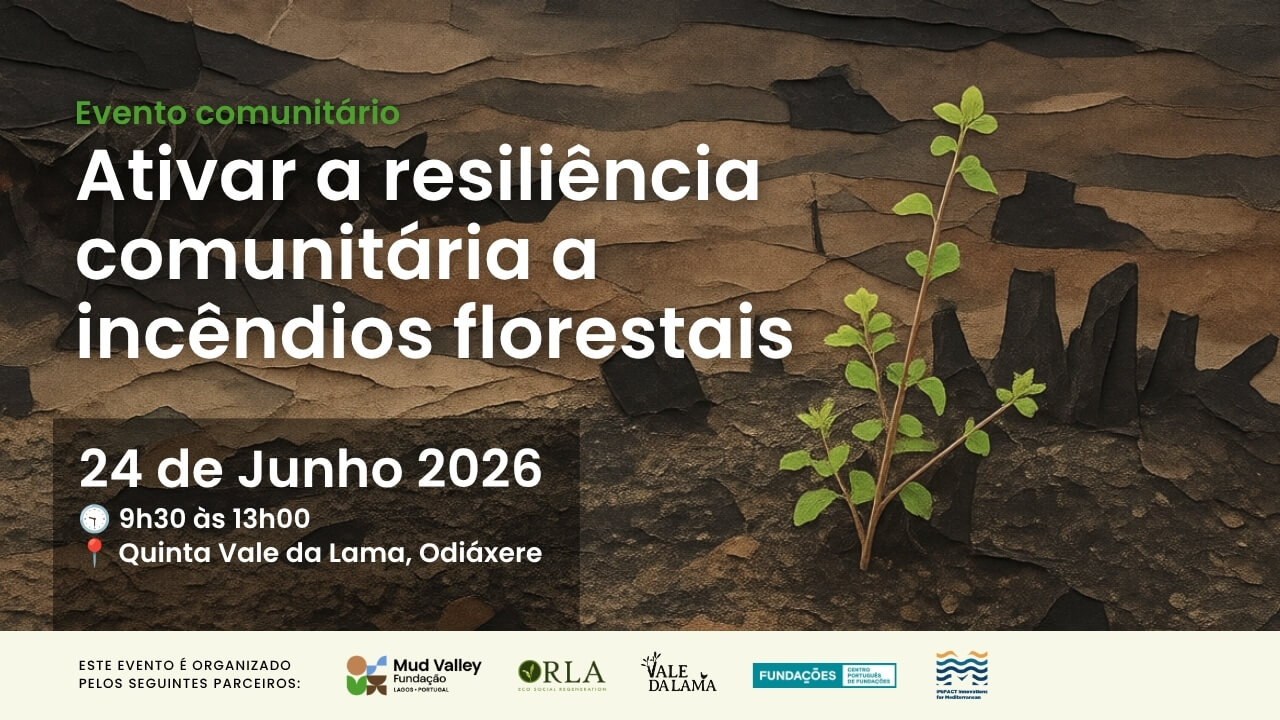
It is with this in mind that we facilitated a participatory workshop on Building Community Resilience to Wildfires, which took place on 24 June 2026 at Quinta Vale da Lama in Odiáxere.
Topics and value to the attendees
Fire ecology and behavior in the Barlavento region
We analyzed the specific risk factors in our region to understand how fire behaves within the landscape.
Territorial resilience design
We mapped the strategies already in place in the Barlavento and began generating ideas for future actions for all phases of risk (prevention, preparation, response and post-fire recovery).
Tools and strategies for wildfire preparedness.
This was a participatory event to (1) learn about the ecology of fire and (2) understand which practical and actionable strategies are suitable for our region, capable of safeguarding the safety and resilience of both our communities and landscapes.
This one-day workshop also served to lay the groundwork and prepare participants for the practical and field-based training course (focused on landscape regeneration and hydration interventions) taking place in November.
24 June 2026
9:30am to 1:00pm
Quinta Vale da Lama
Output from the Session
We engaged in two interactive group activities during the session.
- The first activity used the Hazard Survey Wheel methodology to understand the wildfire vulnerabilities of different geographic parts of our region.
- The second activity focused on the Disaster Risk Mitigation cycle to collaboratively identify what is working well, where gaps exist, and what we can do to enhance wildfire resilience in each phase.
You can download the summary of the workshop’s key takeaways, as well as photos of the materials created, by clicking the button below.
What’s next?
Details on future wildfire resilience programs will follow soon. You can stay up to date on additional actions and events by subscribing to our email newsletter by clicking the “Sign up for email” button at the bottom of this page and following us on Instagram @mudvalleyfoundation.
This event was organized by the following partners: