
This question is particularly important in the Algarve. In 2024, the region’s tourist accommodation establishments recorded 5.25 million guests and 20.7 million overnight stays: around a quarter of the national total in Portugal. These figures reveal opportunities for employment and income, but also an underlying responsibility: to preserve the conditions that allow the region to welcome its visitors.
These conditions include available water, fertile soils, abundant biodiversity, and communities able to live and work locally. Erosion, water scarcity, and the effects of climate change threaten this shared foundation. The landscape that attracts visitors is also where food is grown, relationships are built, and everyday life is sustained.
What is regenerative tourism?
This is where regenerative tourism becomes meaningful. It begins with an understanding of each place and seeks to contribute to its social, ecological, and economic wellbeing. While reducing consumption and impacts remains necessary, the regenerative vision and ambition add a commitment to generating more life and creating a positive energy balance: strengthening the soil’s capacity to sustain life, communities’ capacity to cooperate, and the local economy’s capacity to support those who care for the land.
Anna Pollock, one of the thinkers behind this approach, proposes understanding tourism as part of a living system in which nature, culture, people, and the economy are interconnected. This perspective shifts the starting point: tourism development should be guided by a place’s potential and needs, with the participation of those who live there.
In practice, this requires concrete choices. Buying from local producers can connect hospitality food services with agriculture and create more stable economic relationships. Supporting farming practices that restore soil can link food quality to care for the landscape. Paying people fairly and involving residents in decisions helps distribute benefits and responsibilities. Public policies and business strategies need to sustain these relationships beyond a single experience or tourism season.
Visitors can participate in this process. Understanding where food comes from, learning from those who work the land, or supporting local initiatives are ways to build a more conscious relationship with a place. This participation should respond to real needs, be guided by those who know the area and respect its rhythms. A one-off volunteering activity does not, on its own, demonstrate regeneration.
Regenerative tourism at Vale da Lama
Vale da Lama is a 43 hectare organic, regenerative farm near Lagos, Portugal, where we explore these connections through an ecosystem of projects bringing together Quinta Vale da Lama, Casa Vale da Lama, Associação Novas Descobertas, and Mud Valley Foundation. Agriculture, food, hospitality, education, and community action share common ground here. The farm applies regenerative agriculture and ecosystem restoration practices, while learning and participation programs connect residents and visitors with this work.
The farm’s inclusion as a lighthouse farm in TUI Field to Fork Portugal: Alentejo Regenerativo, coordinated by Terra Sintrópica in partnership with the TUI Care Foundation, forms part of this journey. The project connects agriculture, food, tourism, and community through capacity building, food experiences, and shared learning among people and organizations. The lighthouse farms provide practical examples for collaborative learning and for entrepreneurs seeking to bring together regenerative agriculture, regenerative food systems, regenerative tourism and community.
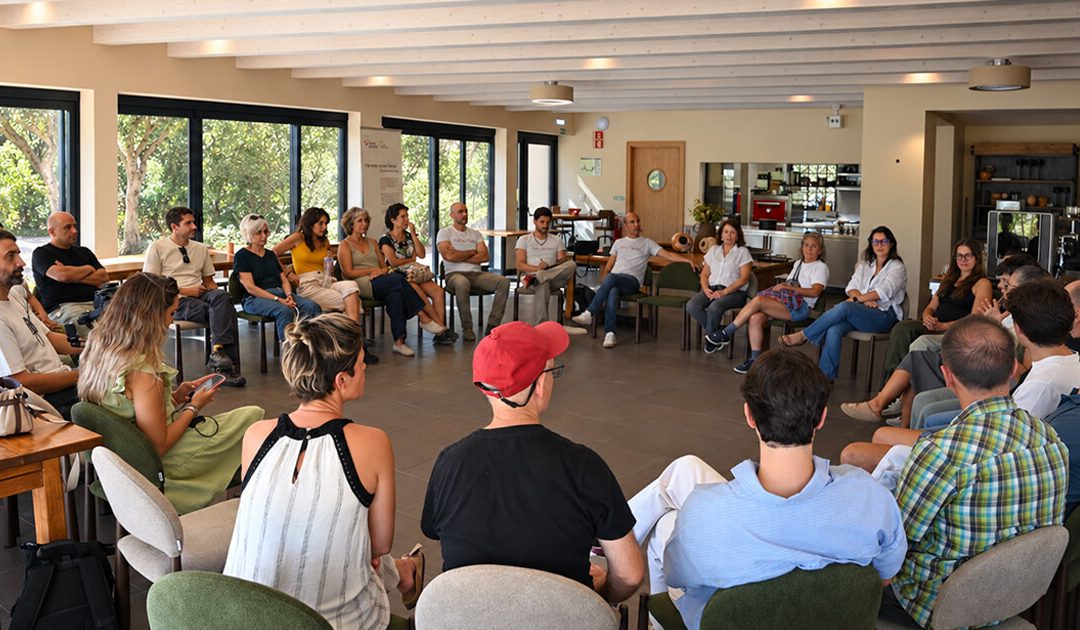
The Field to Fork Community of Practice visited Quinta Vale da Lama on 22 September 2026 as part of this exchange of knowledge. We welcomed 20 people from other projects to make these practices visible and create space for questions about how to connect agricultural production, hospitality, and regeneration. The value of these encounters also lies in the opportunity to learn together and adapt ideas to different contexts.
For us, innovation in tourism involves building these relationships and tracking what they achieve. We need to understand whether they improve soil and water management, strengthen producers’ livelihoods, and increase communities’ capacity to act. This is how intention can become grounded in practice.
Tourism can contribute to the regeneration of places when care for the local environment and community guides the decisions of hosts and visitors alike. At Vale da Lama, this is the path we seek to build: welcoming people and, together, cultivating the conditions for life to keep flourishing.
